02/05/2024
MPhil Education student Grace Batley finds her authentic voice in academia

BSc MRes PhD
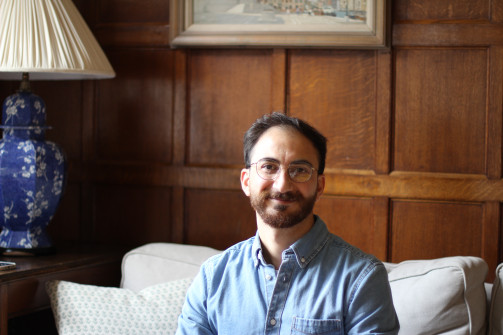
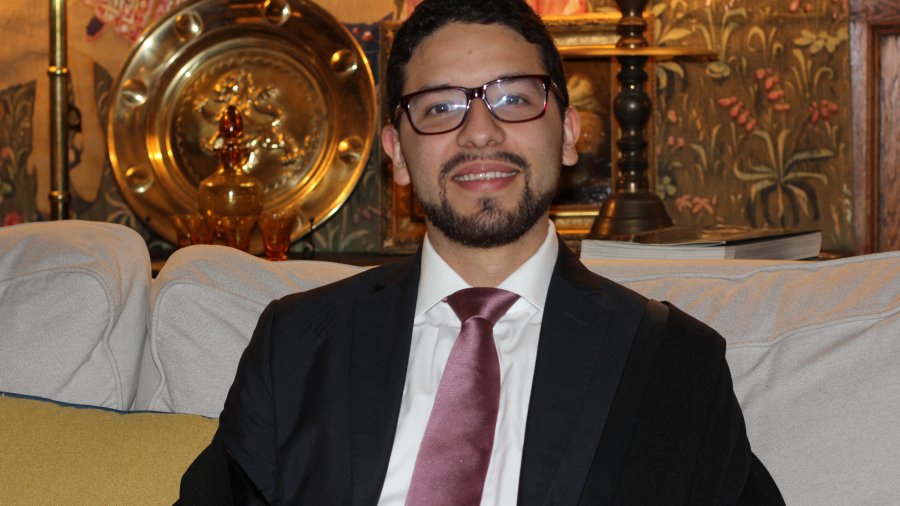
Roger is a BBSRC Discovery Research Fellow hosted at the Department of Chemical Engineering and Biotechnology and a Junior Research Fellow at Wolfson College. Roger's work focuses on exploiting the tools of DNA nanotechnology to elucidate new biophysical principles for membrane signalling and bio-engineering cell-like agents for healthcare and biomedicine.
Roger completed his BSc in Biotechnology Engineering at the Instituto Tecnológico y de Estudios Superiores de Monterrey in Mexico City (2015). He moved to Cambridge UK in 2017 to read for an MRes in Nanoscience and Nanotechnology as part of the Centre for Doctoral Training NanoDTC programme, through which he then obtained a PhD in Physics from the Cavendish Laboratory (2021). He continued his research through two postdoctoral appointments, first at Imperial College London (Department of Chemistry) and later back at the University of Cambridge (Department of Chemical Engineering and Biotechnology).
Roger's work has involved studying the biophysical principles that govern the spatial and temporal organisation of membranes, with the goal of constructing DNA nanostructures that could mimic the form and function of cell-surface machinery. By applying his membrane-active DNA nano-devices, Roger engineers advanced functionalities in synthetic cell-like objects, which are useful as models for fundamental research and hold great potential as next-generation biomedical platforms.
Since 2023, he has been an independent Research Fellow (BBSRC Discovery Fellow) hosted at the Department of Chemical Engineering and Biotechnology, University of Cambridge. Roger is also the coordinator and lecturer of the Bionanotechnology course, taught as part of the MRes in Nanoscience and Nanotechnology and MPhil in Micro and Nanotechnology Enterprise programmes.
Roger’s research interests follow the exciting goals, applications, and impact of synthetic cell science and engineering biology. Roger applies his expertise to advance the toolkit available to engineer synthetic cells and unlock their promised applications to biomedicine.
By applying the tools of amphiphilic DNA nanotechnology to lipid membranes and their phase behaviour, Roger´s work leads to the construction of synthetic cells with purposefully designed functionality. His bespoke DNA nanostructures can impart function to synthetic-cell lipid membranes so that these cell-like objects exhibit behaviours typically observed in living organisms, which can in turn allow synthetic cells to detect and respond to changes in their surroundings.
Exploiting these tailored and bio-mimetic DNA-membrane platforms, Roger designs synthetic cells with the ability to coordinate responses similar to immune cells. With his approach to constructing immune-like synthetic cells, Roger plans to unlock new pathways to detect and respond to the presence of pathogens, enabling the application of synthetic-cell biotechnologies for bottom-up immunity in healthcare and bio-medicine.

Join us for the 2024 Wolfson Research Event: an interdisciplinary academic conference organised by students to showcase the diversity of the research carried out by Wolfson students.

A display of works from the Bradshaw-Bubier studio pottery collection.

Screening of Elia Suleiman’s Divine Intervention, in conversation with assistant director Rania Stephan.

Wolfson College's inaugural Ian Cross Instrumental Scholarship Concert will be given by pianist Samuel Foo with works by Bach, Brahms and Ravel.

How did architecture schools respond to the need to rebuild Britain after World War Two?