05/04/2024
New Press Fellows arrive at Wolfson
BSc (Hons) PhD FHEA
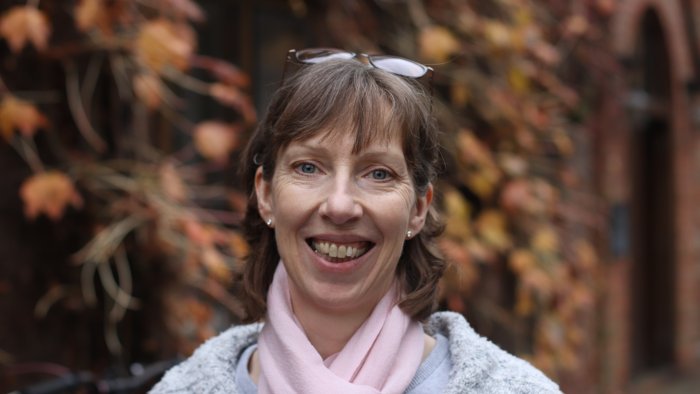
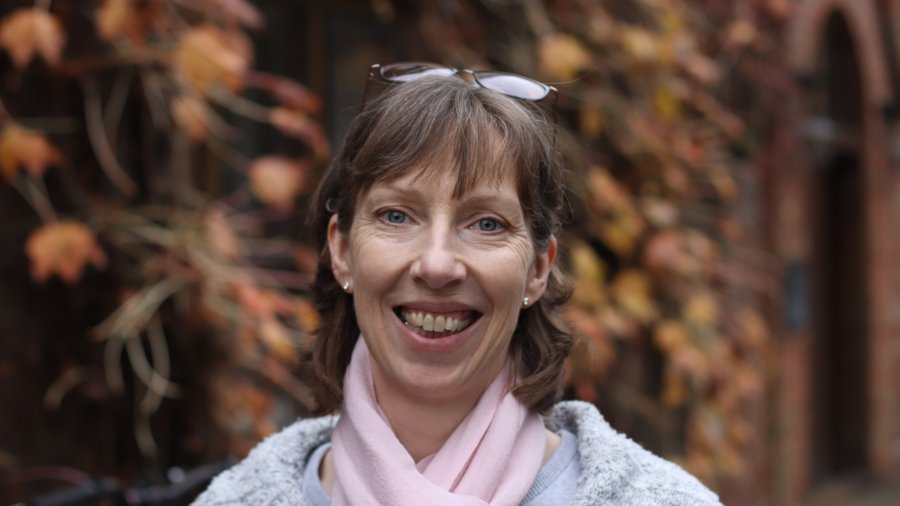
Rosemary Fricker is a neurobiologist and former Director of Medical Sciences at Keele Medical School. Rosemary's research interests are in stem cell therapies for neurodegenerative disease and the role of vitamins in neural development.
Rosemary obtained her BSc (Hons) in Applied Biology from Bath University, and PhD in Neuroscience at Cambridge (Wolfson, 1992-1995).
Following postdoctoral positions at Lund University, Sweden, and Harvard Medical School, Rosemary held a Wellcome Trust Career Development Fellowship at Cardiff University, from 2001-2004.
In 2005, Rosemary took up a lectureship position at the newly opened Keele University Medical School. She was responsible for establishing the first year of the Keele undergraduate degree and from 2016-2019 was Director of Medical Sciences, responsible for the delivery of pre-clinical education on the MBChB programme.
On return to Cambridge, Rosemary joined Wolfson’s Development and Networks team as convenor for the Global Health Research Hub. In 2022 she took on the role of Director of Studies for Pre-clinical Medicine (Standard/Affiliate Course).
Rosemary has had a long association with Parkinson’s UK and is currently a member of their College of Experts. She sits on the Board of NECTAR - the European Network for Cell Transplantation and Restoration. Rosemary has been a Section Editor and Editor of the international neuroscience journal NeuroReport, and is currently a Section Editor for Advances in Clinical Neuroscience and Rehabilitation Journal.
Rosemary's research career focused on developing stem cell therapies to replace neurons lost in neurodegenerative diseases such as Parkinson's and Huntington’s. Her early work explored the optimal conditions for transplant survival and contributed to the development of novel ligands for use in Positron Emission Tomography (PET) scanning to identify living transplants in clinical patients.
Rosemary's more recent research explored the influence of vitamins on neural development and the conversion of stem cells to mature functional neurons. This work led to the identification of vitamin D as a neuroprotective agent for dopamine neurons, and the discovery that vitamin B3 acts as a switch to enhance the conversion of neural stem cells to mature neurons. In collaboration with colleagues at Loughborough University, she developed a microfluidic platform to model complex neuronal circuitry in vitro.
Rosemary is active in public outreach, disseminating her research regionally at Parkinson's UK local groups and as the main speaker at their national lay person's conference in 2016. She has been part of the "Pint of Science" programme to take science research into the community and is a strong advocate of Women in Science.
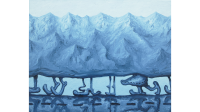
Visit Wolfson's latest exhibition 'After News Before Bed' featuring work by emerging artist Enej Gala, winner of the Wolfson Royal Academy Schools Graduate Prize.
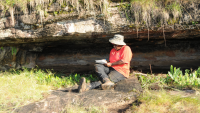
How does the interpretation of geometric rock art in Uganda shed light on the societal and cultural experiences of African Pygmy forest hunter-gatherers?

This event is the third of three roundtables that Wolfson's REACH Research Hub will be organising over the academic year under the heading ‘Hierarchies of Racism?’

Join Emeritus Fellow Dr Brian D Cox for a talk which will outline the development of the University from its origins in 1209 until the present day.

Graduation ceremonies are the culmination of students’ hard work and commitment, and a moment to celebrate the completion of their Cambridge degree.